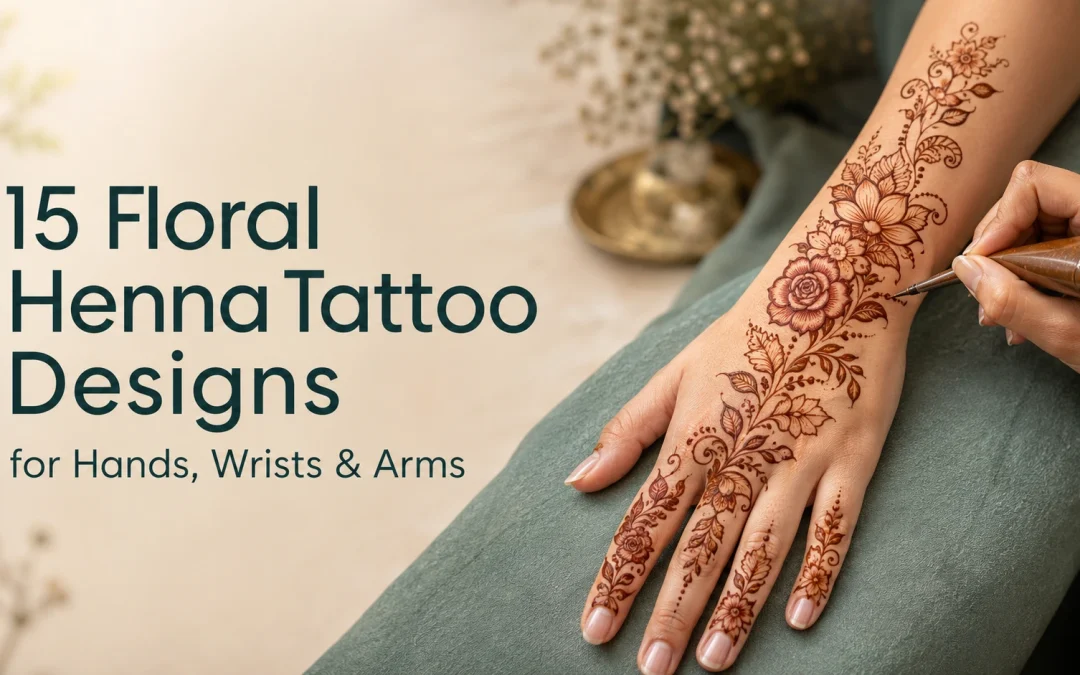
A floral henna tattoo combines flowers, leaves, vines and botanical details to create temporary body art that feels personal and suited to the natural shape of the body. Some people prefer a small flower on the wrist, while others choose a detailed pattern that covers the hand or follows the length of the arm.
Henna stains the upper layer of the skin rather than placing ink beneath it. Natural henna usually develops from orange into a deeper reddish brown over the first two days. The final colour depends on the quality of the henna, skin preparation, placement and aftercare.
At Future Skin, we recommend choosing a design based on more than appearance. The size of the flowers, spacing between the lines and direction of the pattern all affect how the finished henna looks on your hand, wrist or arm.
1. Rose and Vine Henna Design
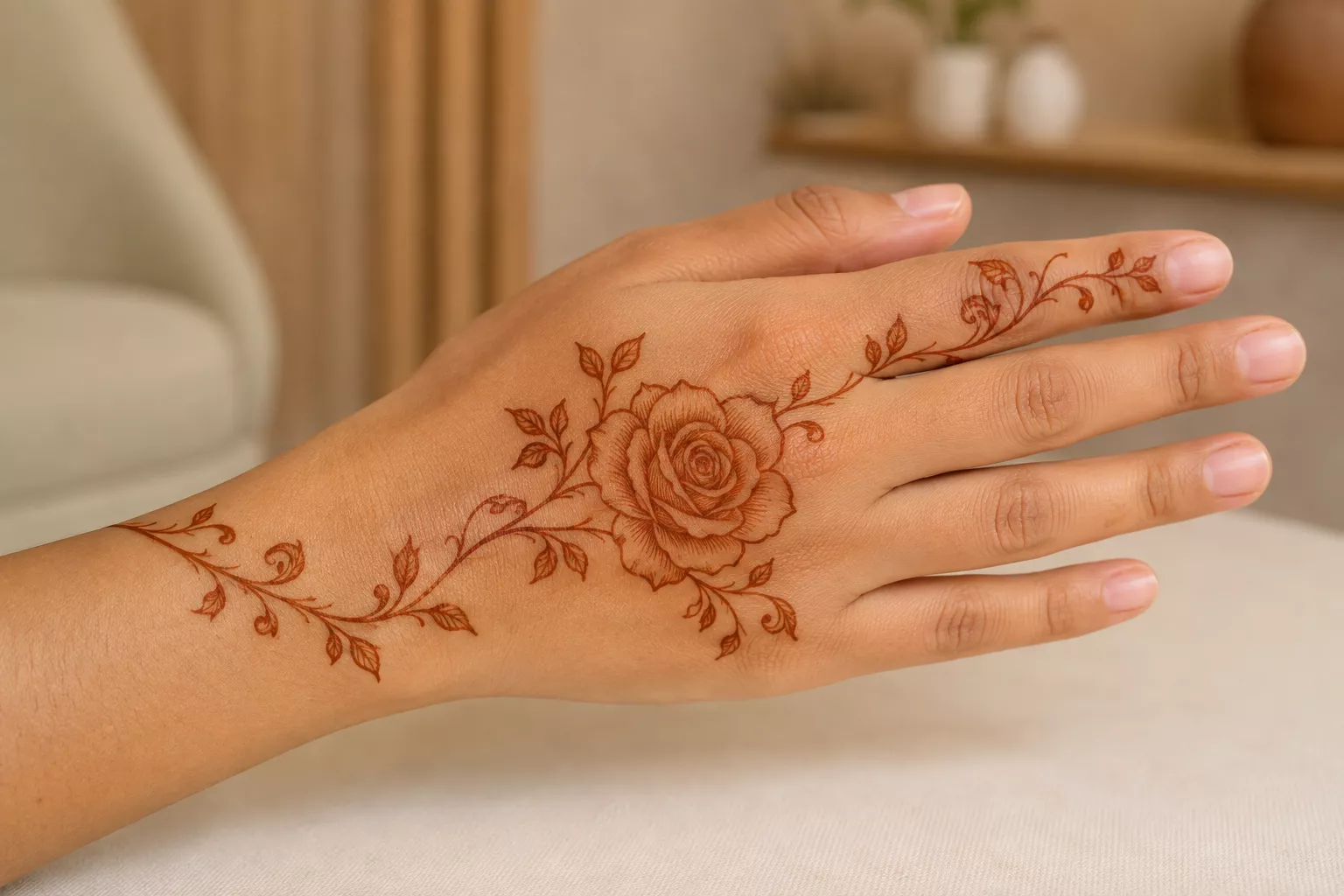
A rose and vine design is a strong choice for anyone who wants visible floral detail without covering the entire hand. The rose can sit in the centre of the back of the hand, while fine vines extend toward the fingers or wrist.
Roses are often connected with love, beauty, affection and personal growth. A single rose creates a cleaner look, while several smaller roses make the design feel fuller. Leaves and curved vines help the pattern follow the movement of the hand naturally.
This floral henna tattoo works particularly well on the back of the hand, inner wrist or forearm.
2. Lotus Flower Henna Tattoo
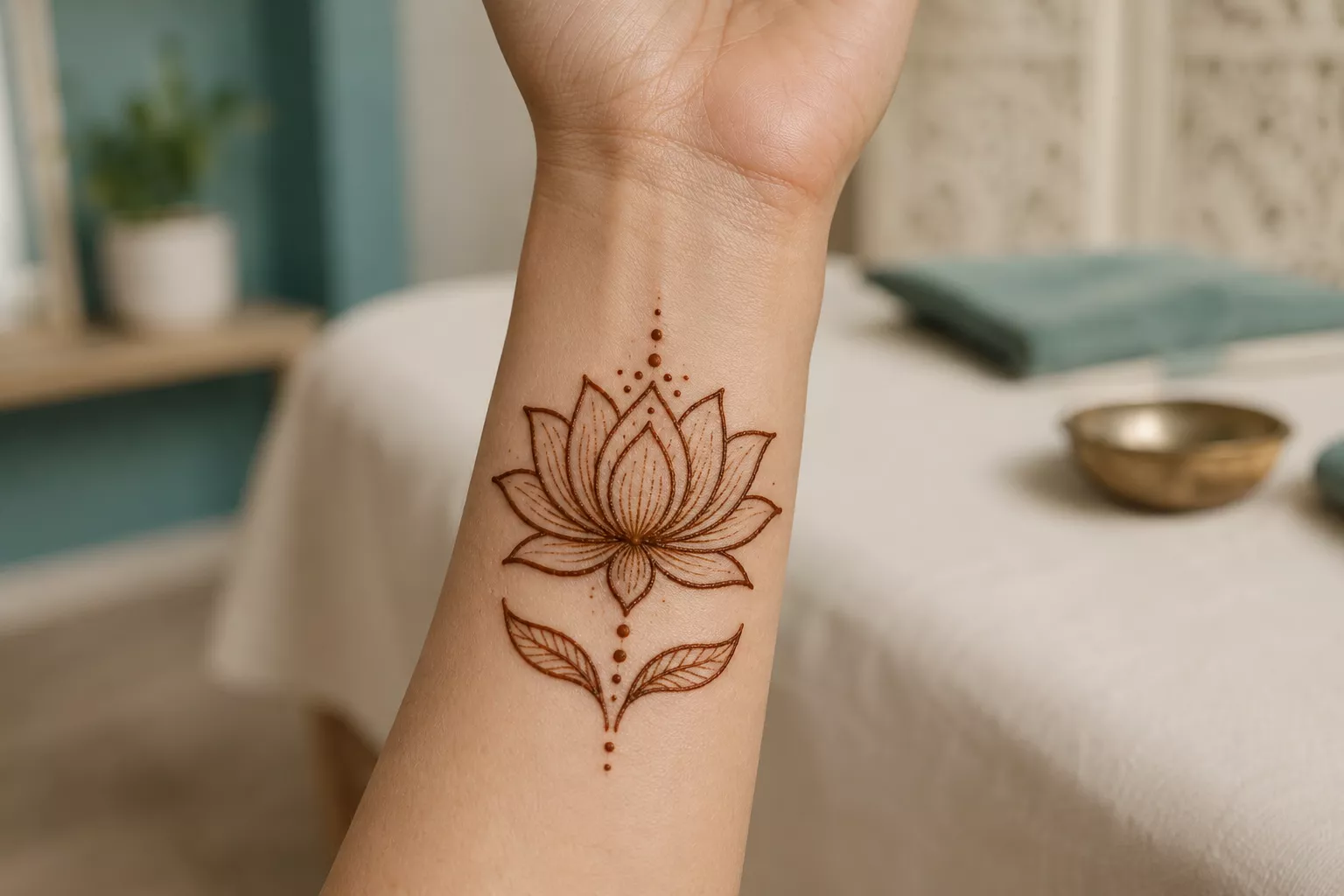
The lotus flower is known for growing through muddy water before reaching the surface. For this reason, it is often associated with resilience, renewal, peace and personal growth.
A lotus design can be drawn with open petals, fine outlines and small decorative dots. On the wrist, it can remain simple and centred. On the forearm, the flower can be combined with leaves, curved lines or hanging ornamental details.
Choose a lotus henna tattoo if the meaning of overcoming difficulty or starting a new chapter feels relevant to you.
3. Daisy Chain Henna Pattern
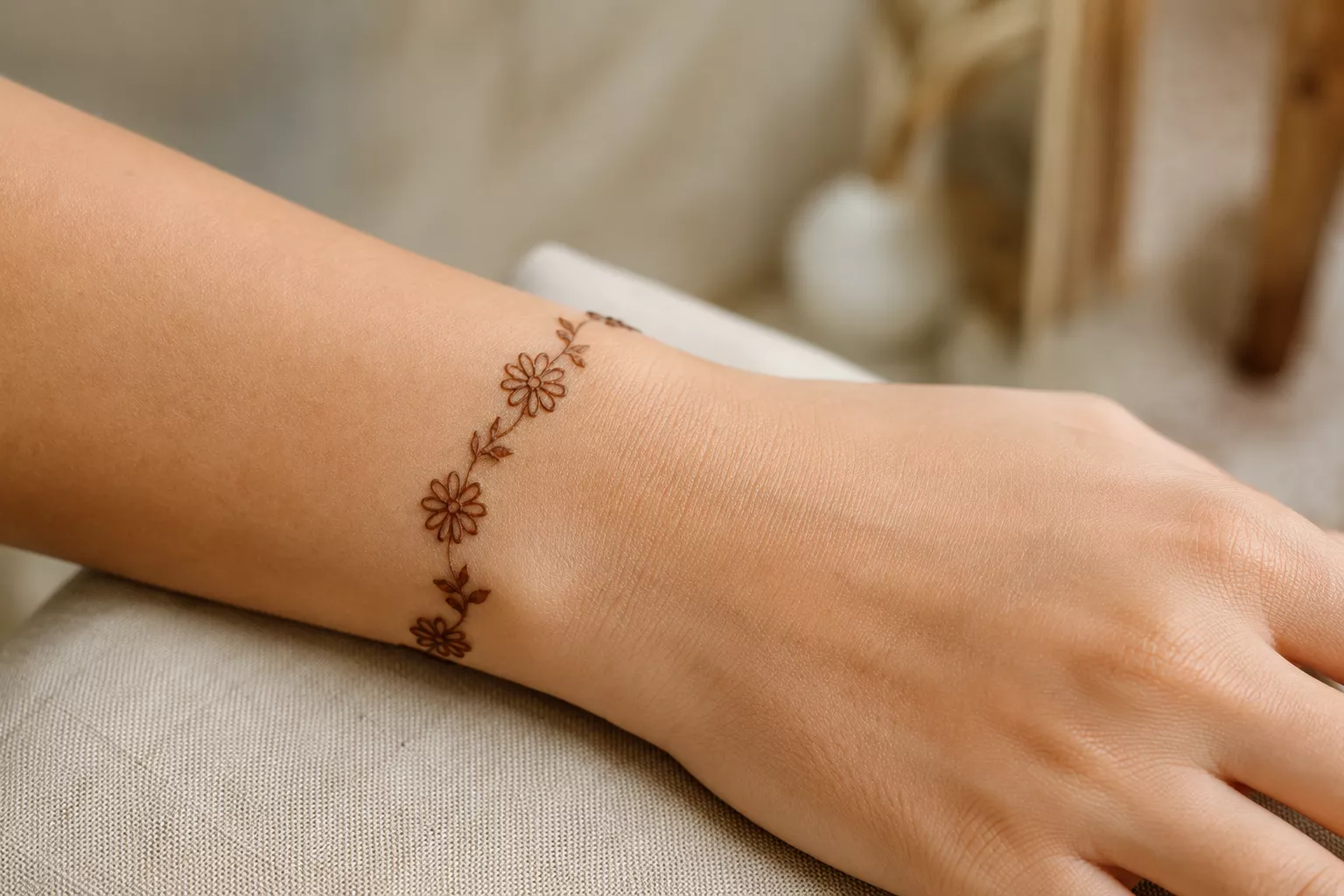
A daisy chain uses several small flowers connected by thin stems or leaves. It has a lighter appearance than large floral patterns and works well for people choosing henna for the first time.
The design can wrap around the wrist like a bracelet, follow the side of the hand or extend along one finger. Daisies are commonly associated with joy, simplicity and new beginnings.
Ask your henna artist to leave enough space between each flower. Clear spacing helps the petals remain visible after the stain develops.
4. Sunflower Henna Design
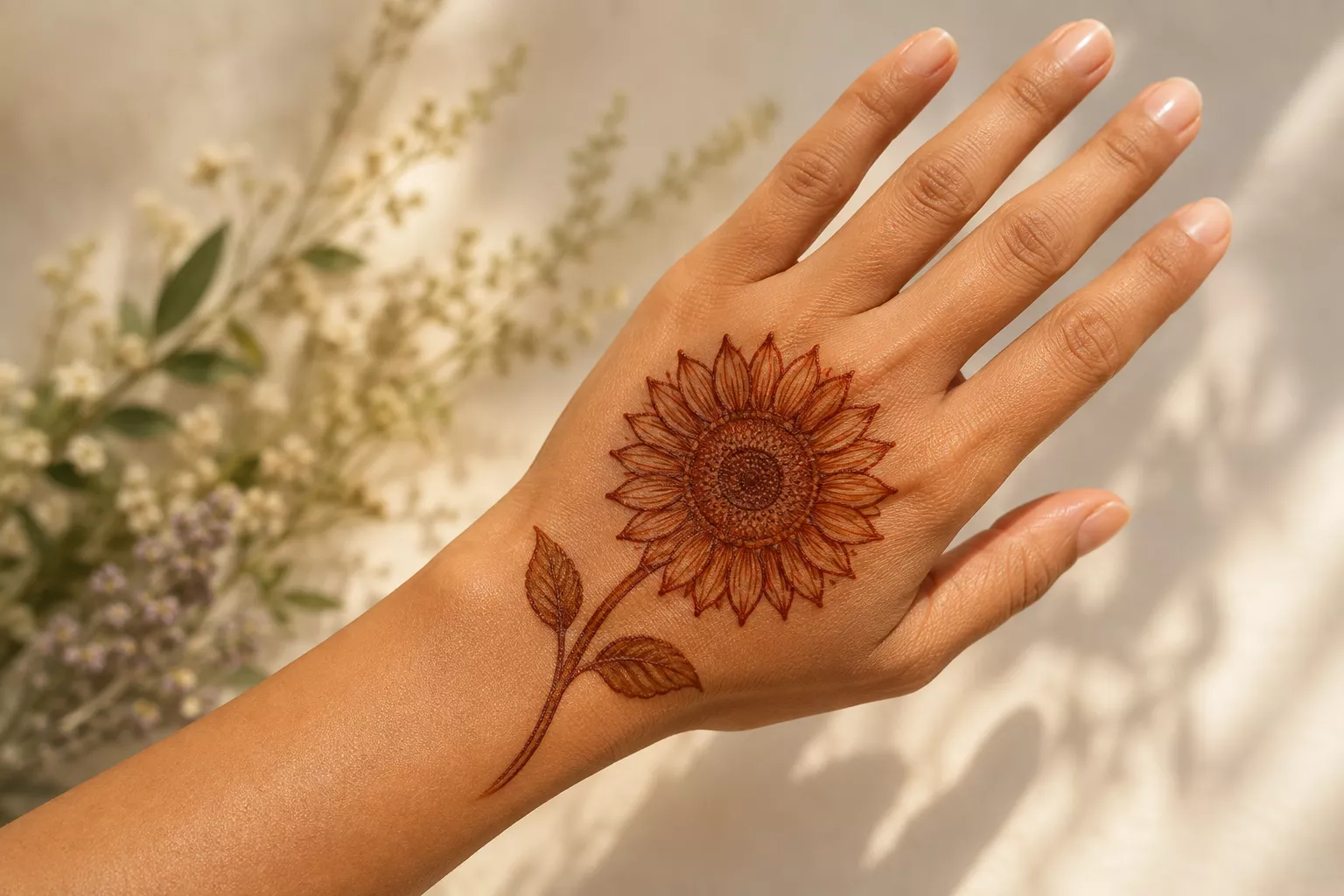
A sunflower henna design usually features a round centre surrounded by long, defined petals. It can be drawn as a single statement flower or included within a larger arrangement of leaves and vines.
Sunflowers are often linked with warmth, positivity, loyalty and confidence. Their circular shape makes them suitable for the palm, back of the hand, shoulder or upper arm.
A larger sunflower gives the artist enough room to add detail inside the centre. If you want a smaller design, simpler petals and less internal shading will help keep it readable.
5. Peony Floral Henna Tattoo
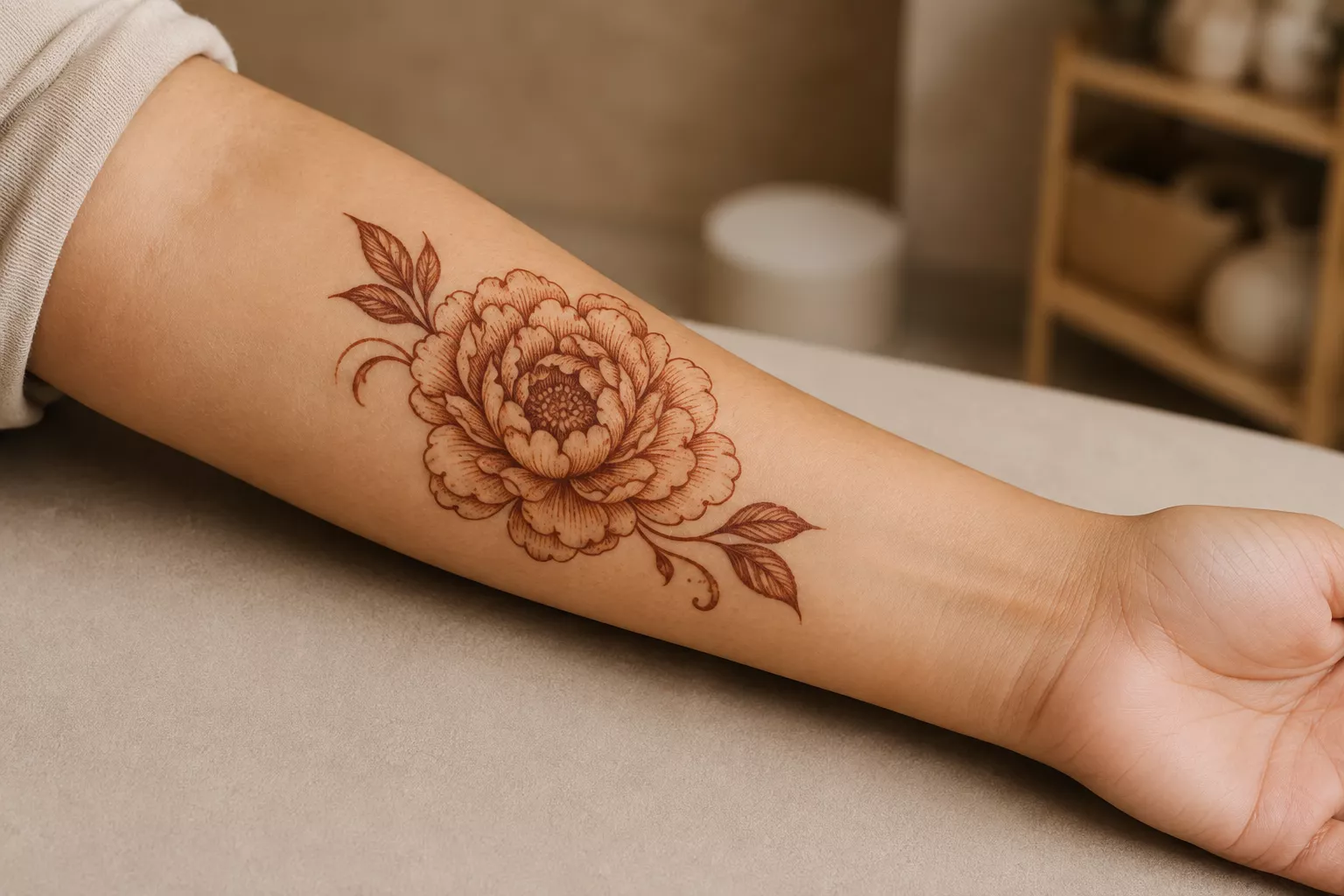
Peonies have rounded layers of petals that create a soft but detailed appearance. They are often associated with affection, prosperity, honour and happy relationships, although the personal meaning can differ from one person to another.
A peony floral henna tattoo looks particularly effective on the forearm, where the artist has enough space to shape each layer. Smaller leaves can be placed around the flower to frame it without making the design feel crowded.
This option suits people who prefer fuller flowers and more visible detail.
6. Floral Mandala Henna Design
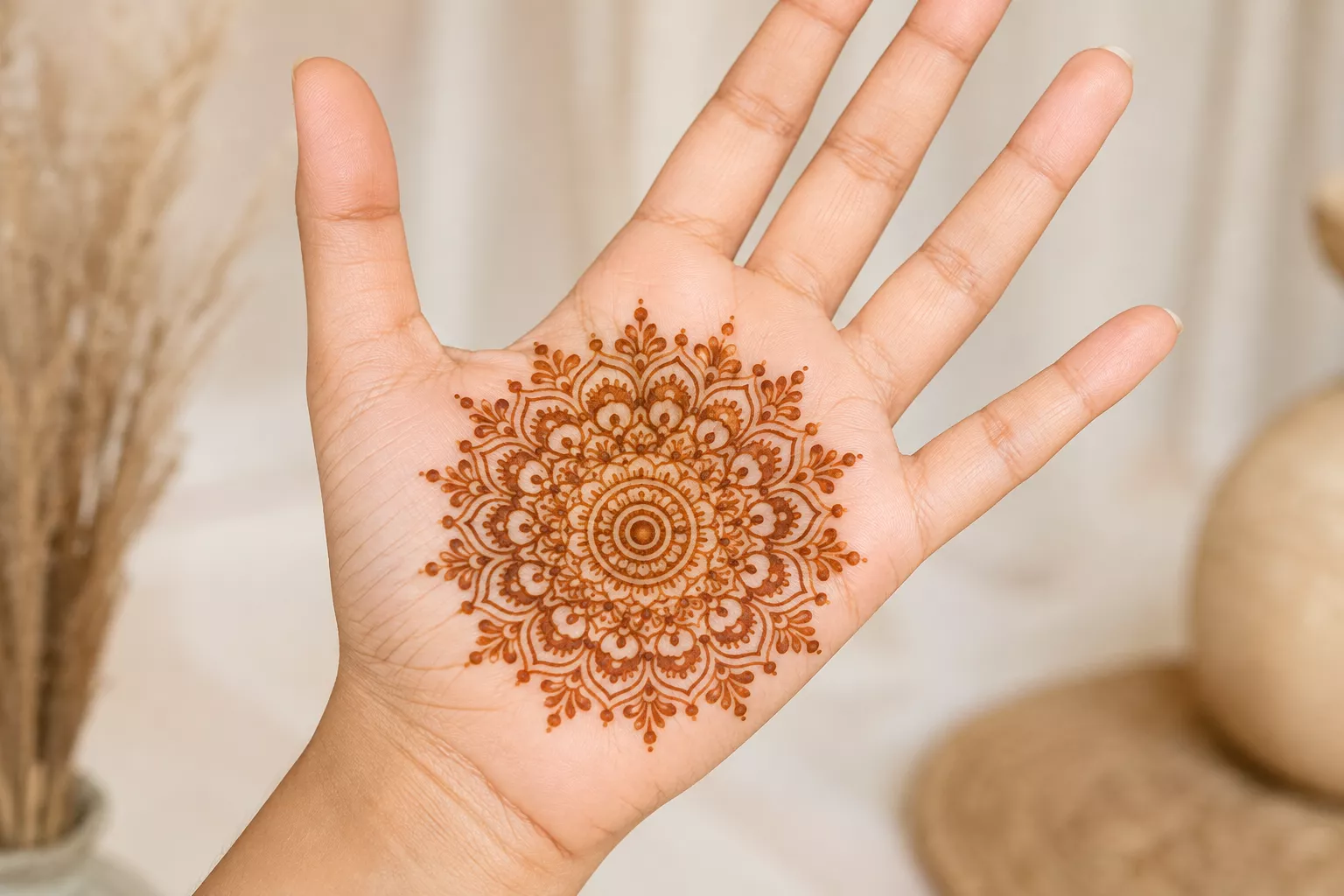
A floral mandala combines petals with a balanced circular structure. The pattern usually begins with a small centre and grows outward through repeated lines, petals and decorative details.
The symmetry of a mandala makes it a natural fit for the palm or back of the hand. It can also be placed on the inner forearm if you want the full shape to remain visible.
Because this design relies on balance, accurate spacing matters. A professional artist can adjust the scale to suit your hand while keeping the pattern centred and proportionate.
7. Arabic Floral Vine Henna
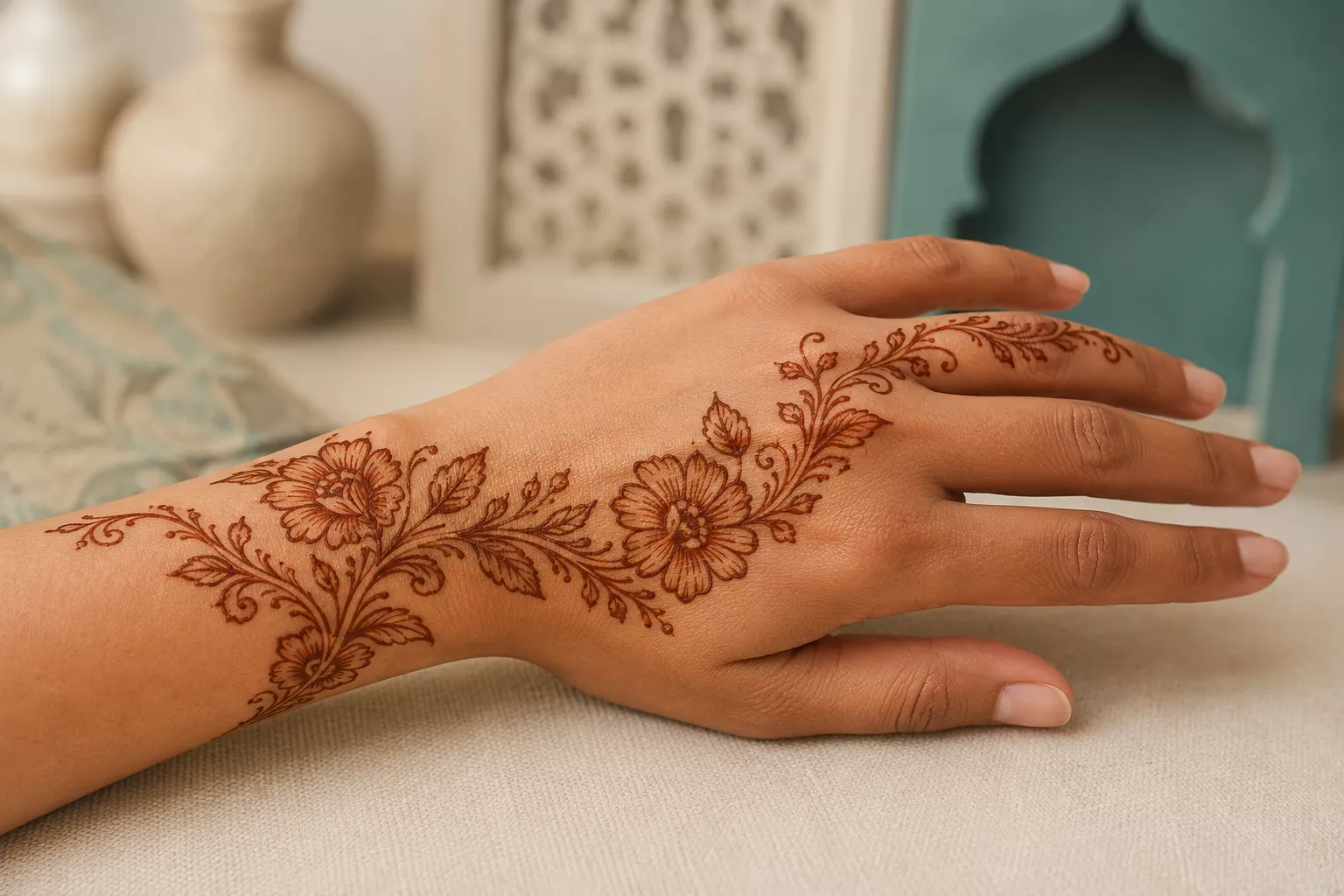
Arabic inspired henna often uses flowing vines, larger flowers and open sections of skin. Instead of covering the entire hand, the pattern may travel diagonally from one side of the wrist toward a finger.
This style works well for people who want visible detail with a lighter overall appearance. The open spaces allow each flower and leaf to remain distinct.
An Arabic floral vine can be kept on the hand or extended along the forearm. It is also easy to personalise by changing the flower type, vine direction and amount of detail.
8. Floral Henna Wrist Bracelet
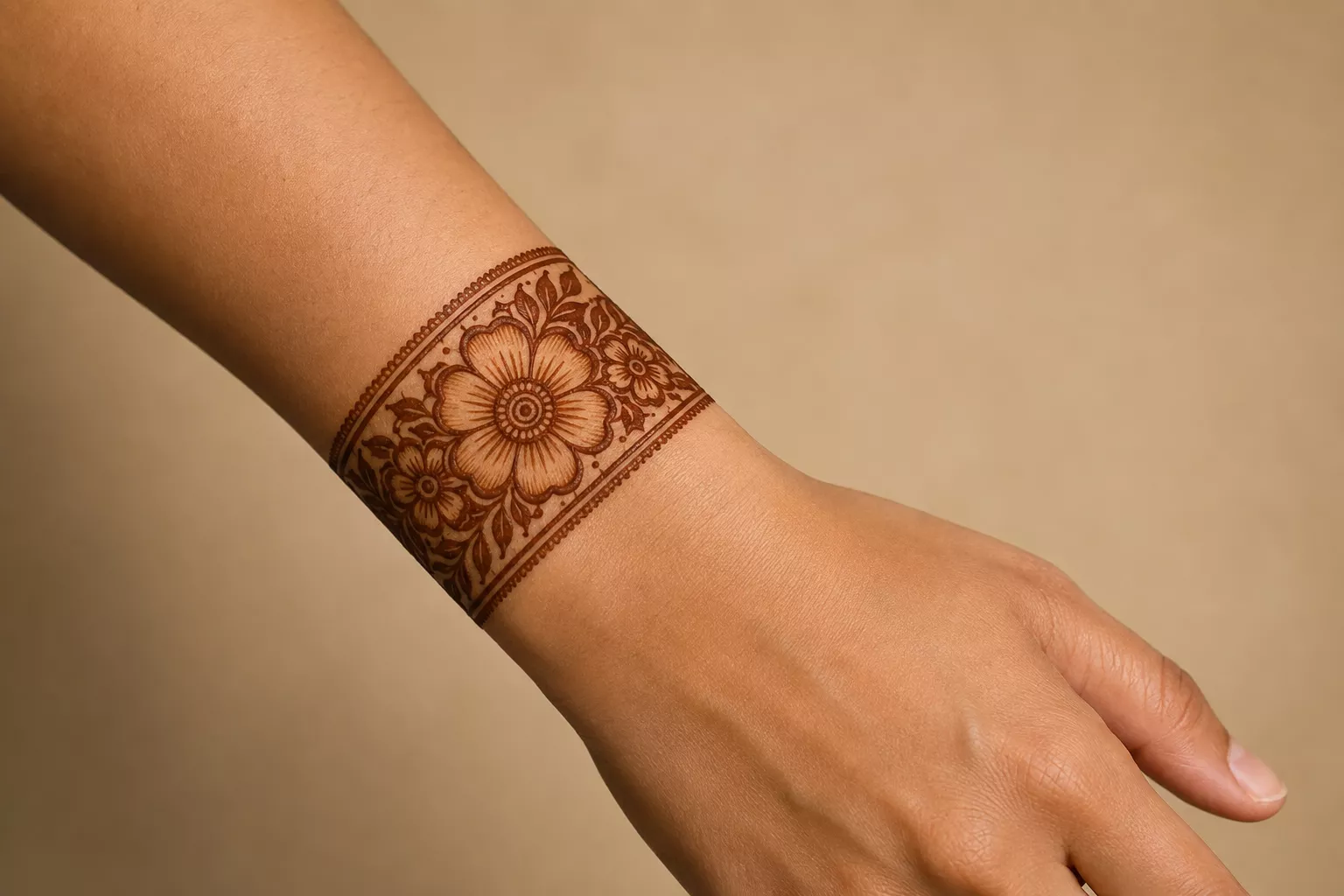
A floral wrist bracelet wraps around the wrist using flowers, leaves and curved bands. It creates the appearance of jewellery without requiring a large design on the hand or arm.
The bracelet can feature one flower in the centre with smaller leaves around the wrist. Another option is a continuous chain of small flowers with fine lines above and below it.
Before the application begins, decide if you want the design to meet fully around the wrist. A complete band requires careful placement so the pattern connects neatly on both sides.
9. Small Finger Flower Henna Designs
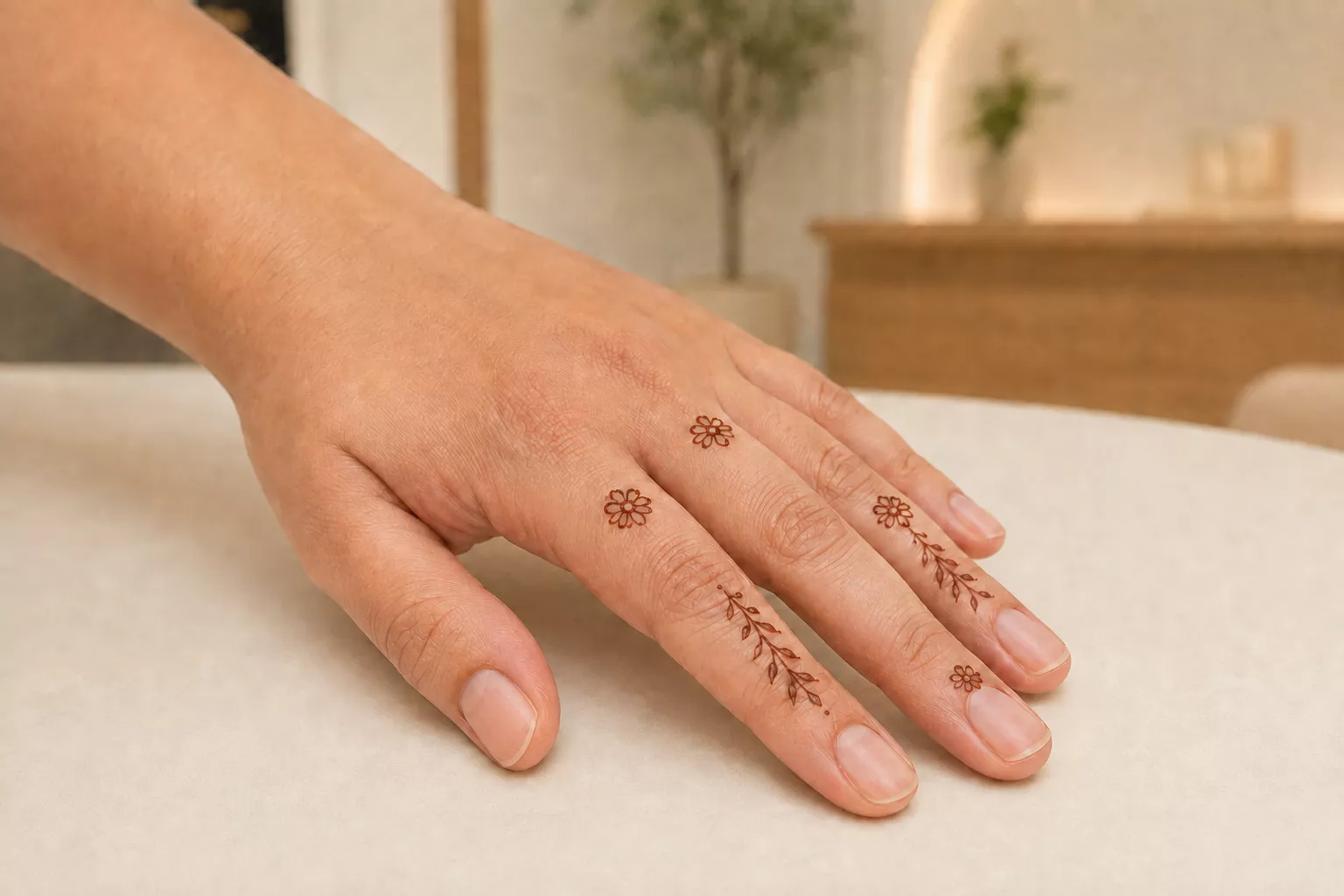
Small flowers can be placed along one finger or spread across several fingers. These designs may include tiny petals near the knuckles, leafy lines along the sides or a small flower below each nail.
Finger henna is highly visible but may fade sooner than designs on the arm because hands are washed frequently. Keeping the design clear and avoiding excessive detail can help it remain recognisable as the stain fades.
This placement works well as a companion to a larger hand design or as a simple floral henna tattoo on its own.
10. Floral Bouquet on the Palm
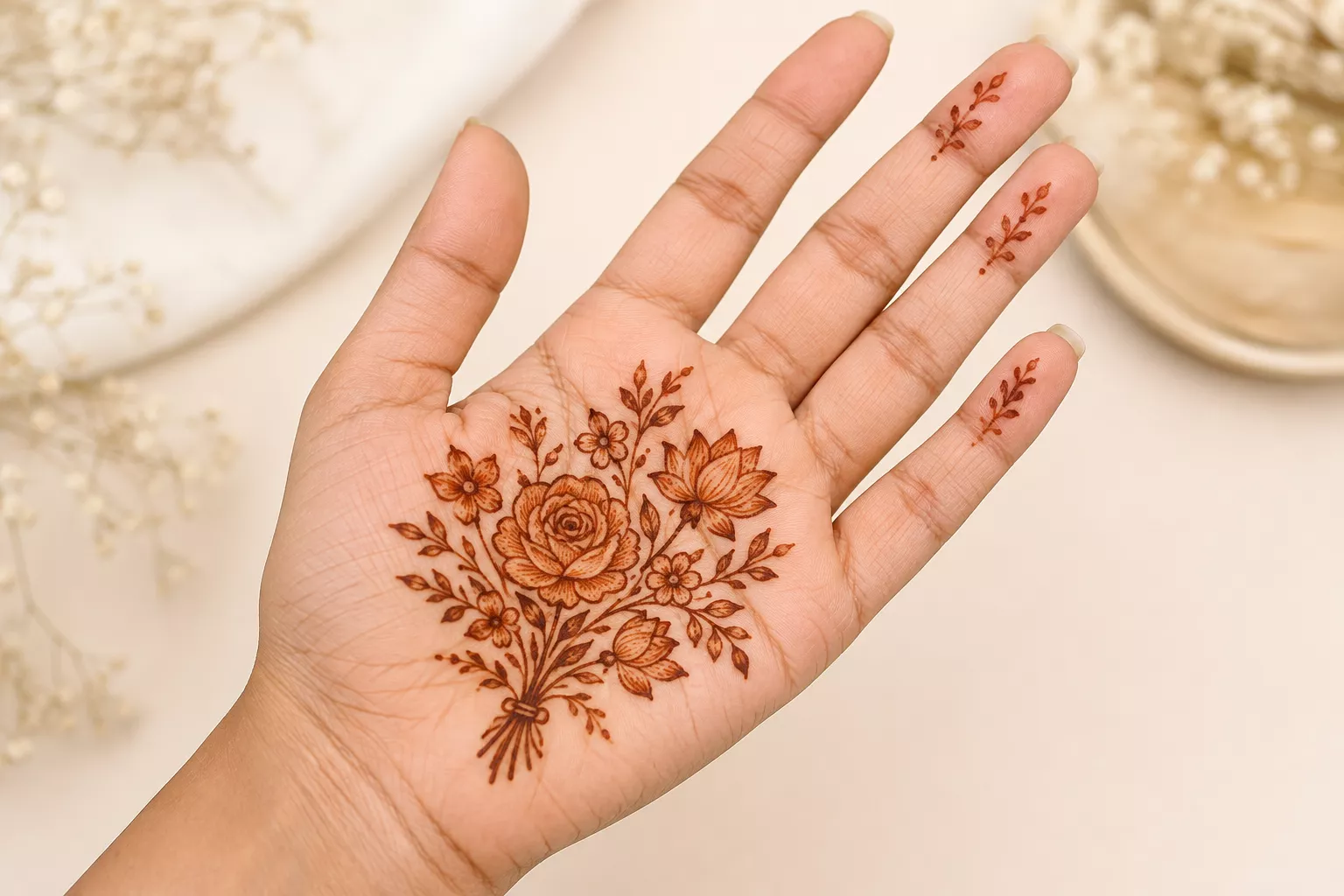
A palm bouquet brings several flowers together in one central composition. Roses, daisies, lotus petals and leafy stems can be arranged to resemble a hand tied bouquet.
The palm often produces a rich henna stain because the skin is thicker in this area. However, the design needs enough open space to prevent the flowers from blending together visually.
This design is suitable for celebrations, cultural events and anyone who wants a detailed focal point. Smaller floral elements can extend toward the fingers to connect the full composition.
11. Floral Lace Henna Cuff
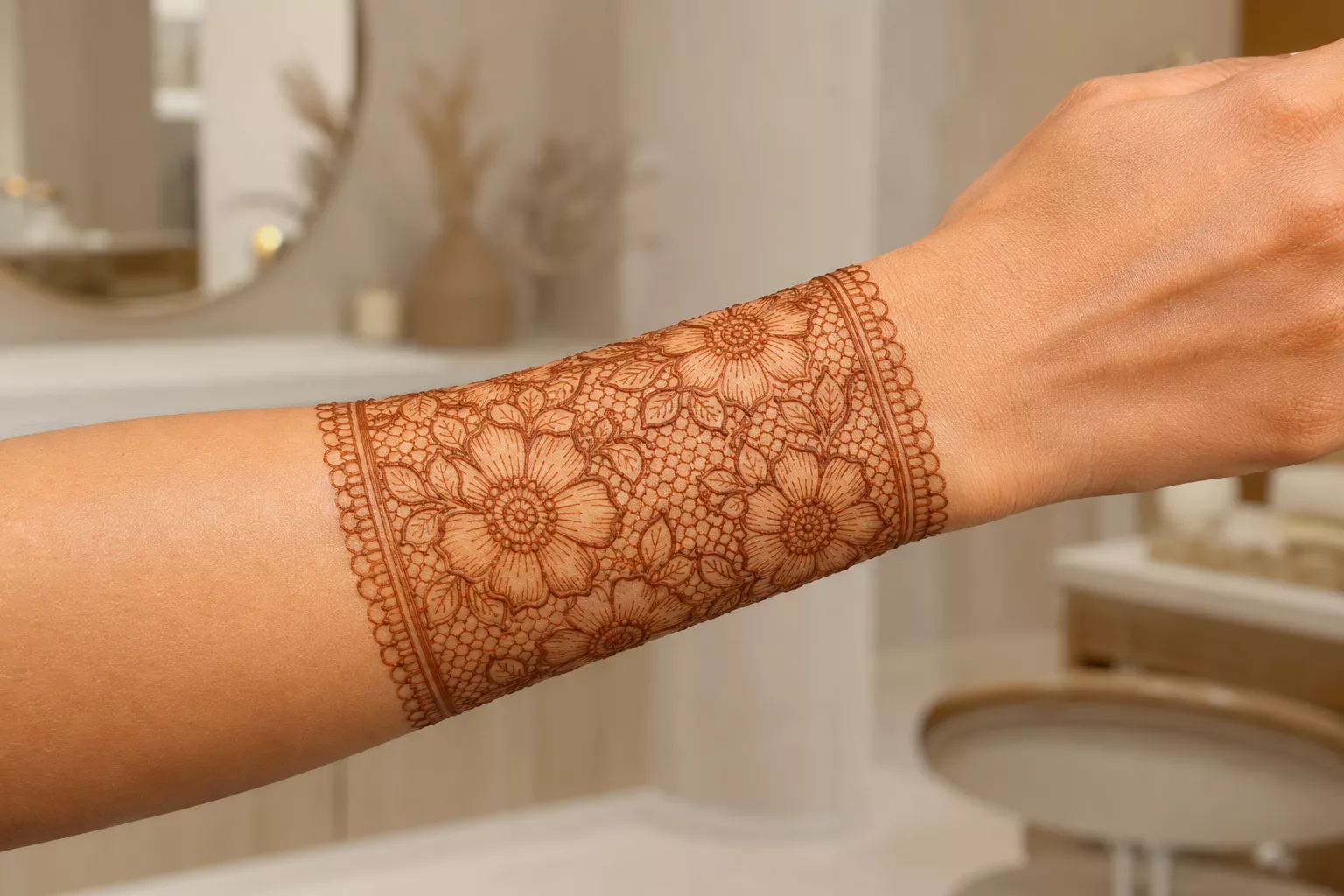
A floral lace cuff covers part of the wrist or lower forearm with repeated flowers, curved lines and fine mesh details. It has a structured appearance while still allowing the flowers to remain the main feature.
The width of the cuff can be adjusted to suit your preference. A narrow cuff feels closer to a bracelet, while a wider version creates a more noticeable arm design.
Fine lines require controlled application and suitable drying time. Try to keep the wrist still immediately after application so the wet henna does not smudge.
12. Cherry Blossom Branch Henna Design
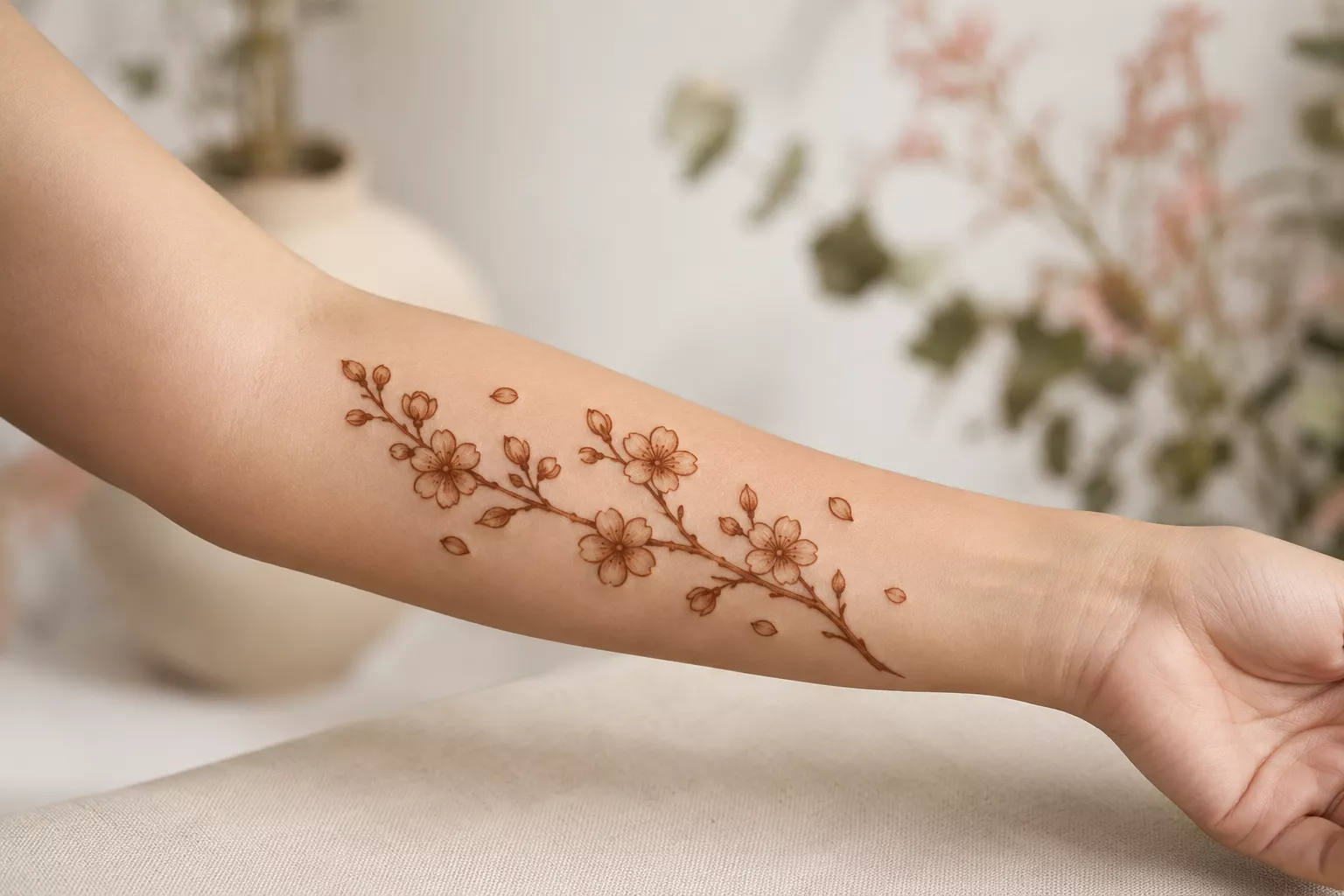
A cherry blossom design features small flowers placed along a thin, curved branch. It follows the shape of the wrist or forearm without requiring heavy coverage.
Cherry blossoms are often associated with renewal, beauty and the temporary nature of life. The design can contain a few open flowers with small buds and petals placed nearby.
This floral henna tattoo looks most natural when the branch follows the direction of the arm. A gentle curve usually sits better than a completely straight line.
13. Lavender Sprig Henna Tattoo
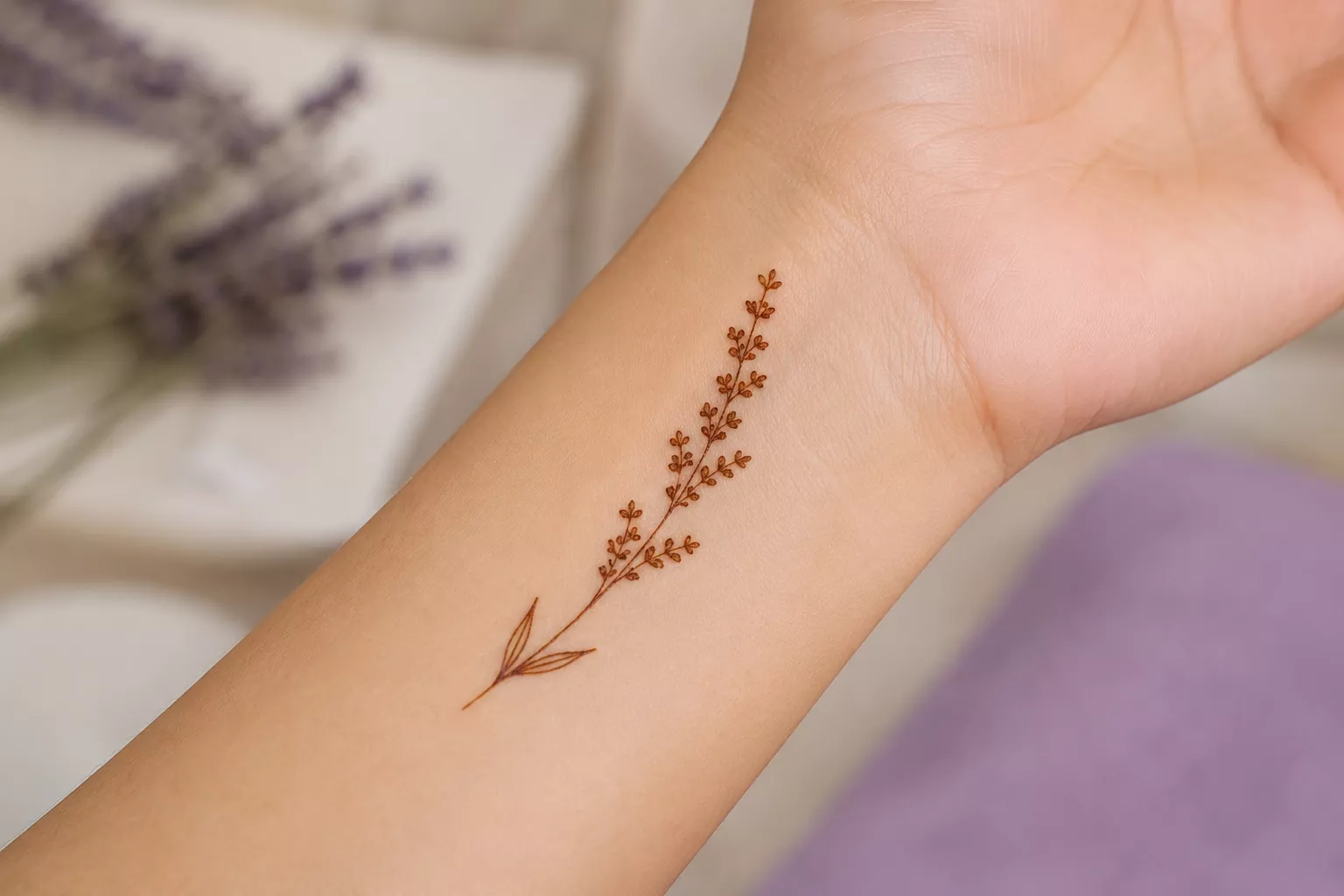
A lavender sprig uses a narrow stem with small flowers placed along both sides. Its slim shape makes it suitable for the inner wrist, side of the hand or forearm.
Lavender is commonly associated with calmness, devotion and healing. The design can remain minimal or include several sprigs tied together with a fine decorative line.
Since lavender flowers are naturally small, clear spacing is important. If the details are placed too closely, the developed stain may look like one solid line rather than separate flowers.
14. Full Arm Floral Trail
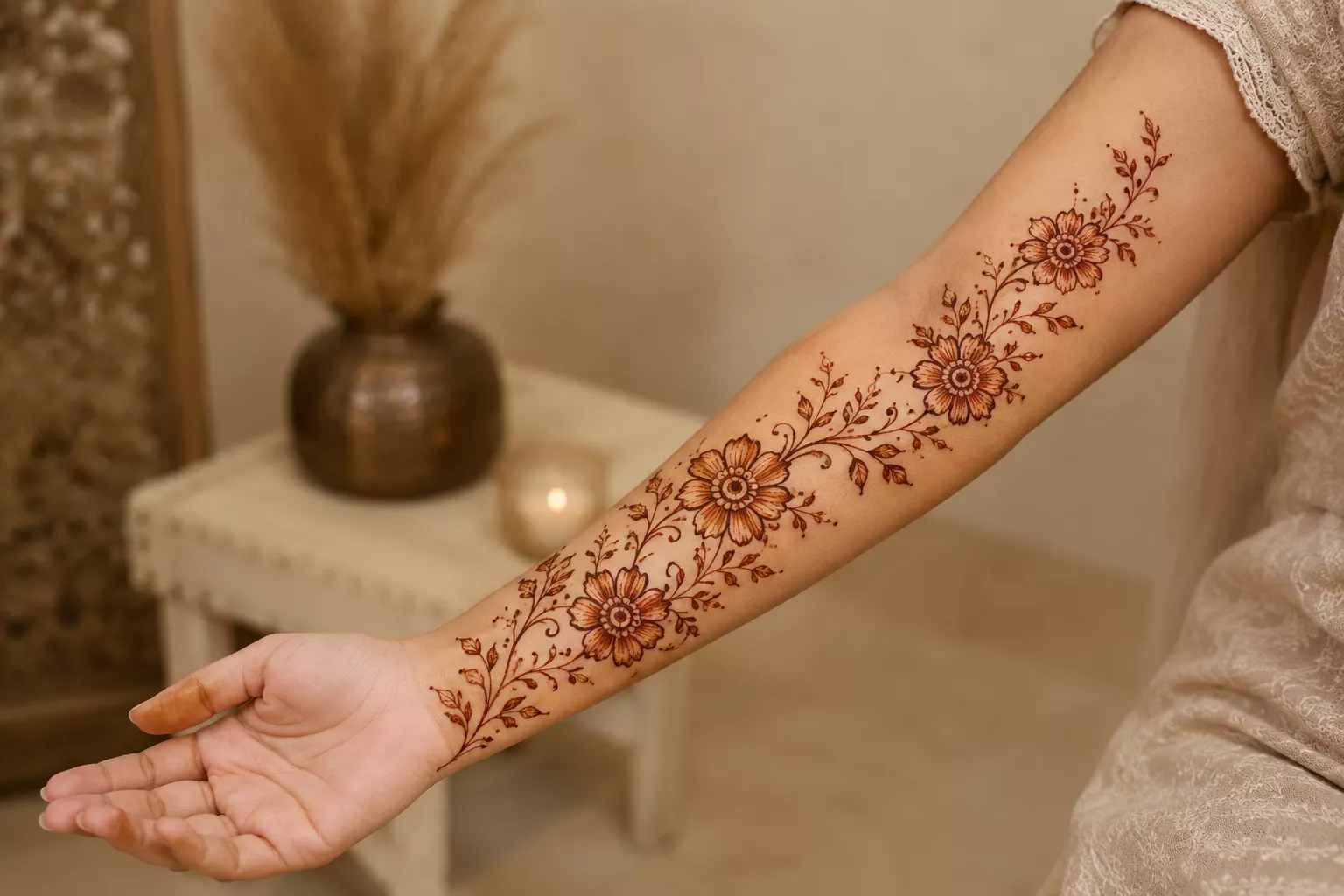
A full arm floral trail uses flowers and vines that travel from the wrist toward the elbow or upper arm. It provides more coverage than a small wrist design but can still leave open areas of skin.
The artist can place larger flowers at key points and connect them with thinner leaves, stems and buds. This creates movement while preventing the design from becoming too dense.
The arm should be considered as one continuous space. Planning the full direction before application helps the floral pattern follow the body naturally.
15. Personalised Birth Flower Henna Design
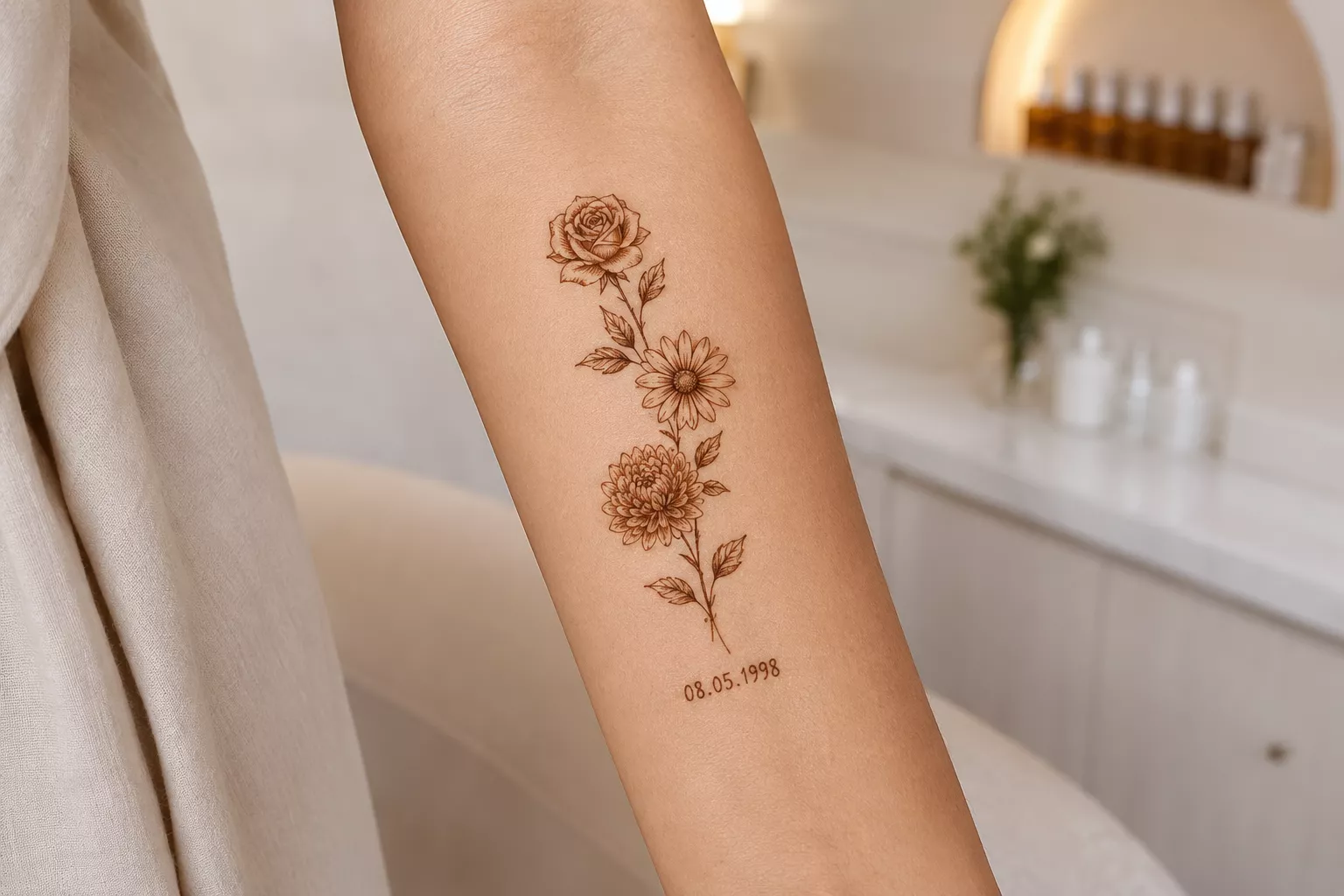
A birth flower design uses a flower connected with your birth month or the birth month of someone important to you. Several birth flowers can also be combined to represent family members, close friends or meaningful relationships.
This idea gives the floral henna tattoo a personal reason beyond its visual style. Names, dates or initials can be added, but they should remain small enough not to overpower the flowers.
The wrist and forearm provide enough room for a birth flower, stem and a few personal details. Bring clear references to your appointment so the artist can understand the flower shape and meaning you want.
How to Choose the Right Floral Henna Design
Start by considering where you want the henna and how visible you want it to be. Hands and fingers are easy to see but are exposed to frequent washing. Wrist designs can resemble jewellery, while the forearm gives the artist more space for larger flowers and detailed vines.
Next, consider the amount of coverage. A small lavender sprig or daisy chain creates a lighter look. A floral mandala, palm bouquet or arm trail provides more detail and requires a longer application time.
Bring reference images to your consultation, but allow the artist to adjust the pattern to your anatomy. A design that looks balanced on one hand may need changes in size, spacing or direction to suit another person.
You can view Future Skin’s henna tattoo service to learn more about professional henna application and available design options.
Caring for Your Floral Henna Tattoo
Arrive with clean, dry skin and avoid applying lotion or oil to the area before your appointment. These products can create a barrier between the henna paste and the skin.
After application, allow the paste to dry fully and keep it on for the time recommended by your artist. Avoid rubbing, smudging or washing the area while the paste is developing. Once it is removed, limit contact with water during the early stages of colour development.
The stain may appear light orange at first. It usually becomes darker over the next 24 to 48 hours. Frequent washing, swimming, exfoliation and skin care products can cause henna to fade more quickly.
Natural henna should develop into an orange, red or brown tone. Avoid products sold as black henna because they may contain ingredients such as PPD that can irritate or damage the skin.
If you are ready to choose a floral design for your hand, wrist or arm, you can book a henna appointment with Future Skin. For questions about design size, placement or appointment preparation, please contact our studio.
Conclusion
A floral henna tattoo can be adapted to suit your preferred placement, level of detail and personal meaning. Small flowers and delicate vines work well on fingers and wrists, while mandalas, bouquets and floral trails suit larger areas such as the palm and forearm.
Choose a design with clear spacing and enough room for the floral details to remain visible as the stain develops. A professional henna artist can adjust the flower size, direction and coverage to complement the natural shape of your hand, wrist or arm.
Learn more about professional henna tattoo application at Future Skin or book an appointment to discuss your preferred flowers, placement and design size.
Frequently Asked Questions
What is a floral henna tattoo?
A floral henna tattoo is a temporary body art design featuring flowers, petals, leaves, stems or vines. Popular choices include roses, lotus flowers, daisies, sunflowers, peonies and birth flowers.
How long does a floral henna tattoo last?
A floral henna tattoo usually remains visible for approximately one to two weeks. The exact duration depends on the placement, skin type, stain quality, washing habits and aftercare. Designs on the hands and fingers may fade sooner because these areas are washed more frequently.
Where is the best place for a floral henna design?
Hands, wrists and arms are popular placements for floral henna. The palm suits mandalas and detailed bouquets, while the wrist works well for bracelets and small flowers. The forearm provides more space for vines, larger flowers and longer botanical patterns.
Does applying a henna tattoo hurt?
Henna application does not involve needles or placing ink beneath the skin. The paste is applied directly to the skin and allowed to dry. The process is generally comfortable, although anyone with sensitive skin should discuss their concerns with the artist before application.
How long does henna take to become dark?
Fresh henna often appears light orange when the dried paste is removed. The stain usually develops into a deeper reddish brown colour over the following 24 to 48 hours. Avoiding water during the early development period can help the colour mature properly.
Can I personalise a floral henna tattoo?
Yes. You can select flowers connected with your birth month, culture, personal experiences or someone important to you. The artist can also adjust the size, placement, leaves, vines and decorative details to create a design suited to your body.
How should I prepare for a henna appointment?
Wash the chosen area and arrive with clean, dry skin. Avoid applying lotion, oil, sunscreen or other skin products before the appointment because they may prevent the henna paste from making even contact with the skin.
Is black henna safe to use?
Products marketed as black henna may contain PPD or other ingredients that can cause irritation, burns or allergic reactions. Natural henna normally produces an orange, red or brown stain rather than a black one. Ask your artist what ingredients are being used before the application begins.
Recent Comments