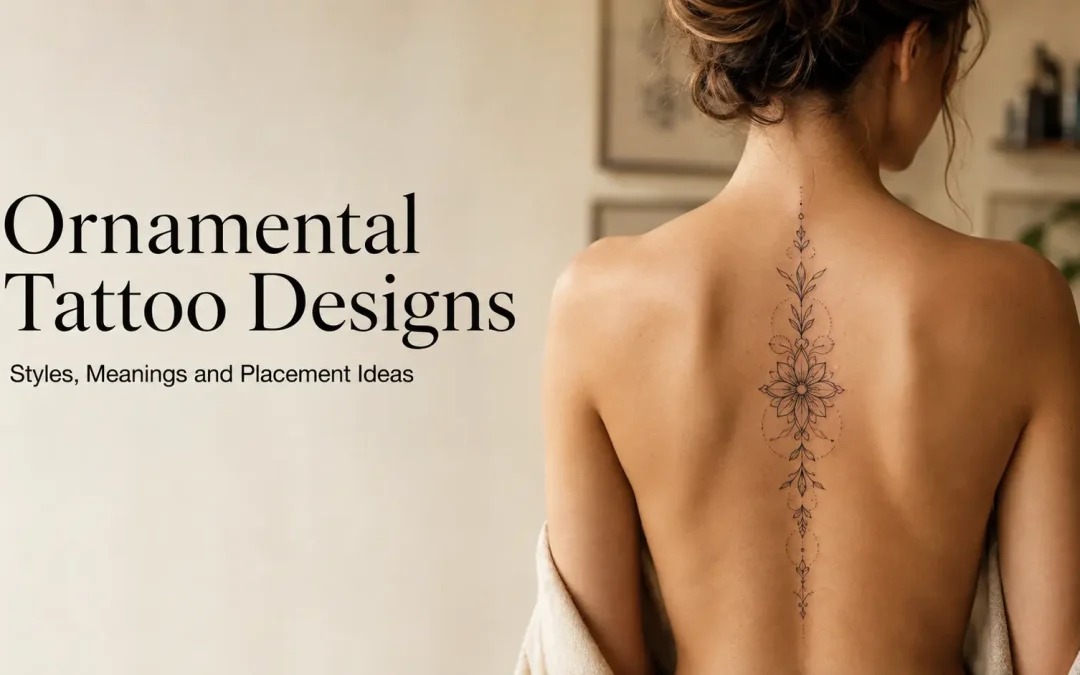
Ornamental tattoos turn patterns, symmetry and decorative details into body art that feels personal to the wearer. Some designs are delicate and minimal, while others use bold black ink to cover a larger area of the body. What connects them is the way every line, curve and repeated shape works together as part of a balanced composition.
Choosing an ornamental tattoo is not only about finding an attractive pattern. The design should complement your natural anatomy, remain readable over time and reflect the style you genuinely want to wear.
At Future Skin Tattoo, we believe a successful ornamental tattoo should look as though it was created specifically for the person wearing it. This guide explains the most popular ornamental tattoo styles, their possible meanings and the placements that work well for each type of design.
What Is an Ornamental Tattoo?
An ornamental tattoo is a decorative design made from repeated patterns, flowing lines, geometric shapes, botanical details or symmetrical elements. These tattoos often take inspiration from jewellery, architecture, lace, mandalas, nature and traditional decorative art.
Unlike a small symbol that can be placed almost anywhere, an ornamental piece is usually designed for a particular part of the body. The artist considers the direction of the muscles, the shape of the bones and the way the skin moves. This allows the pattern to follow the body instead of appearing flat or disconnected.
Ornamental tattoos can be simple or highly detailed. A small wrist design may use only a few curved lines and dots, while a large ornamental back tattoo can include layers of symmetry, flowers, geometric shapes and blackwork.
Popular Ornamental Tattoo Styles
Ornamental tattoo designs can take many forms. Understanding the main styles can help you decide which visual direction suits your personality and preferred placement.
1. Mandala Ornamental Tattoos
Mandala tattoos use circular patterns that expand outward from a central point. They are known for symmetry, repetition and carefully measured details.
Many people associate mandala designs with balance, unity, focus and personal growth. However, mandalas also have cultural and spiritual importance in several traditions. If you are inspired by a traditional symbol, discuss its origin and meaning with your tattoo artist before including it in your design.
Mandala ornamental tattoos work particularly well on rounded or broad areas of the body, including the shoulder, upper back, chest, thigh and knee. Smaller versions can also be adapted for the forearm or calf.
2. Geometric Ornamental Tattoos
Geometric ornamental tattoos are created from precise lines, circles, diamonds, triangles and repeated shapes. The pattern may be completely symmetrical or combine structured geometry with softer details.
This style can represent order, stability, balance or the relationship between different parts of life. Some people simply enjoy the clean and controlled appearance of geometric body art without attaching a specific meaning to it.
Accuracy is important with this style. Small inconsistencies can become visible when a pattern relies heavily on straight lines and repetition. Choosing an artist with strong geometric work in their portfolio can make a significant difference.
3. Floral Ornamental Tattoos
Floral ornamental tattoos combine decorative patterns with flowers, leaves, vines and stems. The botanical elements soften the structure of the design and allow it to flow naturally across the body.
Different flowers can add personal meaning. A rose may represent love, beauty or resilience. A lotus is often connected with growth and renewal. Birth flowers can represent loved ones, family members or meaningful dates.
Floral ornamentation works beautifully on the forearm, thigh, sternum, shoulder, back and along the spine. The design can be light and spacious or rich in detail, depending on the available area.
4. Fine Line Ornamental Tattoos
Fine line ornamental tattoos use thin, controlled lines to create a delicate appearance. Common details include small leaves, curved shapes, dots, chains and jewellery inspired patterns.
This style is often chosen for the wrist, fingers, sternum, ankle, neck or along the spine. It can look refined and subtle when the design has enough space between its smallest elements.
Fine lines should not be confused with lines that are too faint or crowded together. A professional artist will adjust the design according to the placement, skin and final size so that the pattern has room to settle and remain visible.
5. Blackwork Ornamental Tattoos
Blackwork ornamental tattoos use solid black ink, strong outlines and areas of negative space. They usually appear bolder than fine line pieces and can create a powerful contrast against the skin.
This style is well suited to larger pieces on the arm, chest, back, thigh or leg. Solid shapes can also help connect existing tattoos or form part of an ornamental sleeve.
Because blackwork can feel visually heavy, the balance between filled areas and open skin is important. Negative space allows the details to breathe and prevents the design from becoming difficult to read.
6. Lace and Jewellery Inspired Tattoos
Lace inspired tattoos use loops, curves, hanging details and repeated patterns that resemble fabric or decorative jewellery. They can wrap around the wrist, upper arm, thigh, ankle or sit beneath the chest like a permanent ornamental accessory.
Some designs resemble necklaces, bracelets, anklets or decorative chains. Others use lace patterns to create a softer and more romantic look.
These tattoos require careful planning because very small details can become crowded if the design is reduced too much. Your artist may recommend making the piece slightly larger or simplifying certain sections to protect its clarity.
7. Dotwork Ornamental Tattoos
Dotwork uses carefully placed dots to create shading, texture and gradual changes in depth. It is often combined with mandalas, geometric patterns and floral elements.
The style can produce soft transitions without relying on traditional smooth shading. From a distance, the dots create shape and dimension. When viewed closely, the individual marks become part of the visual appeal.
Dotwork ornamental designs can suit both small and large placements, although detailed pieces usually need enough surface area to preserve the pattern.
8. Custom Mixed Style Ornamental Tattoos
Many of the most personal ornamental tattoos combine several styles. A design might place a flower in the centre of a geometric pattern, surround a mandala with leaves or connect bold black shapes using fine lines and dots.
A mixed style piece gives your artist more freedom to create something around your body and preferences. It is also a good option if you like ornamental work but do not want a design that looks overly formal or perfectly uniform.
Ready to create your ornamental tattoo? Book an appointment with Future Skin Tattoo today.
Best Placement Ideas for Ornamental Tattoos
Placement has a major effect on the final appearance of ornamental body art. The same pattern can look completely different on the wrist, spine, thigh or chest.
Ornamental Sternum Tattoos
The sternum is one of the most popular placements for symmetrical ornamental tattoos. A central pattern can sit beneath the chest and extend outward along the natural curves of the body.
Mandala details, hanging jewellery shapes, flowers and fine line patterns work particularly well here. The final size should be planned carefully so the design remains centred and balanced.
The sternum can be a sensitive area, especially near the ribs and breastbone. Pain varies from person to person, so comfort breaks and session length should be discussed with your artist.
Ornamental Spine Tattoos
The spine provides a natural vertical line for ornamental tattoo designs. Long patterns, flowers, leaves, celestial details and geometric shapes can follow the centre of the back.
A spine tattoo may be small and minimal or extend from the upper back toward the lower back. Precise positioning is essential because even a slight shift can affect the visual balance of a symmetrical design.
Your artist may ask you to stand naturally while checking the stencil. This helps them evaluate the design according to your normal posture rather than only your position on the tattoo bed.
Ornamental Back Tattoos
The back offers enough space for detailed ornamental compositions. Large mandalas, floral arrangements, geometric panels and symmetrical blackwork can be designed without forcing small elements into a limited area.
A back piece may be centred between the shoulder blades, placed across the upper back or expanded into a full composition. It also provides room for future additions if you plan to develop the tattoo over several sessions.
Ornamental Forearm Tattoos
The forearm is a practical choice for people who want to see their tattoo regularly. Long decorative patterns can follow the inner forearm, while wrapping designs can move around the outer arm.
Fine line patterns, geometric designs, flowers and smaller mandalas are common choices for this placement. The forearm also provides a useful starting point for a future ornamental sleeve.
Consider how often the area will be exposed to sunlight. Regular sun protection after the tattoo has fully healed can help preserve the appearance of the ink.
Ornamental Hand and Wrist Tattoos
Small ornamental tattoos can resemble bracelets, jewellery or decorative cuffs when placed on the wrist or hand. These areas are visible and naturally suited to designs that wrap around the body.
Hands and fingers experience frequent washing, movement and environmental exposure. Tattoos in these areas may change or fade differently from tattoos placed on more protected skin. Your artist can explain how line weight and detail may need to be adjusted for the placement.
Ornamental Thigh and Hip Tattoos
The thigh gives an artist a broad surface for floral ornamentation, mandalas, lace patterns and larger geometric designs. A piece can remain private or become visible depending on your clothing.
Designs can follow the outer thigh, frame the hip or extend toward the knee. The larger area allows the artist to use detailed patterns while maintaining enough negative space between elements.
This placement is also suitable for people who may want to expand the tattoo later.
Ornamental Shoulder and Upper Arm Tattoos
The rounded shape of the shoulder works naturally with circular mandalas and curved geometric patterns. A design can remain centred on the shoulder or continue down the upper arm.
The shoulder is a useful starting point for an ornamental sleeve because patterns can be extended around the arm without forcing the original design to change.
Ornamental Calf and Ankle Tattoos
The calf provides a vertical area for floral, geometric and mandala inspired designs. An ornamental ankle tattoo can wrap around the leg like an anklet or extend upward in a narrow pattern.
Very detailed designs usually need more space than the ankle provides. If clarity is important, your artist may suggest moving the piece slightly higher or reducing the number of small details.
Have an ornamental tattoo idea in mind? Book your appointment today.
Final Thoughts
Ornamental tattoo designs can be minimal, bold, meaningful or entirely decorative. The best results come from combining a style you genuinely enjoy with a design that respects your anatomy and has enough space to remain clear.
Take time to explore different patterns, placements and artists. A thoughtful consultation can help transform your references into an original tattoo that feels balanced and personal.
Frequently Asked Questions
What is the best placement for an ornamental tattoo?
Popular placements include the sternum, spine, back, forearm, shoulder, thigh, calf, wrist and ankle. The best option depends on the shape, size and level of detail in the design.
Are ornamental tattoos suitable for a first tattoo?
Yes. A small or moderately sized ornamental design can work well as a first tattoo. New clients should discuss pain, session length, placement and aftercare with their artist before making a decision.
What is the difference between ornamental and geometric tattoos?
Geometric tattoos mainly use structured shapes, measured lines and repeated mathematical patterns. Ornamental tattoos can include geometry, but they may also use flowers, lace, jewellery inspired details and flowing decorative elements.
Do fine line ornamental tattoos fade quickly?
All tattoos change gradually over time. Placement, sun exposure, line weight, aftercare and skin can affect how a tattoo settles. An experienced artist will adapt the amount of detail and spacing to the chosen size and location.
Can ornamental tattoos include colour?
Yes. Although black and grey ink is common, ornamental tattoos can include selected colours or full colour details. Colour should be planned carefully so it supports the pattern rather than making the design difficult to read.
How long does an ornamental tattoo take?
The time depends on the size, placement and complexity of the pattern. A small design may be completed in one session, while a large back, chest or leg piece may require several appointments.
Are ornamental tattoos painful?
Tattoo discomfort varies by person and placement. Areas with less padding, including the sternum, ribs, spine, ankle and hand, are often considered more sensitive. Your artist can explain what to expect based on your chosen location.
Why is symmetry important in ornamental tattoos?
Symmetry gives many ornamental designs their balanced appearance. Careful stencil placement is especially important on the sternum, spine and other central areas where small alignment differences may be noticeable.
Can an ornamental tattoo be added to an existing tattoo?
Yes, depending on the placement and style of the existing work. Ornamental patterns, blackwork and decorative borders can sometimes connect separate tattoos or fill open spaces. An artist should inspect the area before recommending a design.
How do I make my ornamental tattoo unique?
Share several references, explain which details you like and allow your artist to create a pattern for your body. Personal flowers, meaningful symbols and placement choices can make the tattoo distinctive without copying someone else’s work.
Recent Comments